
How to Build a Hyrox Mindset When the Race Gets Busy

The loudspeaker hits, the clock starts, the crowd is up, and your legs feel amazing for about five minutes. Then the stations begin to stack, your heart rate climbs, and the race stops feeling clean and simple.
That’s the moment that decides a lot of Hyrox days. Fitness matters, of course, but mental toughness matters just as much. Staying calm embodies that resilience. A steady athlete wastes less energy, makes better choices, and keeps moving when the race gets messy.
If you want a stronger Hyrox competition mindset, start here. The goal isn’t to make the race feel easy. It’s to stay in charge when it stops feeling smooth.
Key Takeaways
- Build mental resilience in training by visualizing race chaos, practicing calm during discomfort, and adopting one simple cue like “smooth” or “long exhale” to reset focus.
- On race day, start with a sustainable pace using RPE, break the event into the next 10 minutes or station, and use box breathing to slow spiraling thoughts.
- When stations pile up, reset after each one with a quick breath and eyes forward, use instructional self-talk like “one rep at a time,” and embrace hard patches as expected.
- Finish strong by saving focus for the final run, shifting to race mode with tall posture and arm drive, then reflect post-race on what kept you calm to build future confidence.
Build the right mindset with mental training before race day ever arrives
A strong race mindset isn’t something you throw together in the final week. It starts in training, when you teach yourself how to stay composed while your body is pushing back. Establish training rituals and maintain sleep hygiene to support recovery and build mental resilience.
Know the race will feel messy, and plan for that
Hyrox is supposed to feel crowded, awkward, and hard. That isn’t a warning sign. That’s the event.
When athletes panic, it’s often because they expected a neat performance and got chaos instead. Reframe that early with visualization to prepare for the chaos. Expect heavy legs. Expect noisy transitions. Expect one station to feel worse than it should. When that moment arrives, it feels familiar, not alarming.
If the race feels rough, it doesn’t mean you’re failing. It means you’re racing.
Use training sessions to practice calm, not just fitness
Don’t only train your engine. Train your response.
Run hard, then go straight into a sled push. Do wall balls when your breathing is still ragged. Keep some sessions as race rehearsals, with short rest and quick transitions. You’re not trying to create panic. You’re trying to make discomfort feel normal.
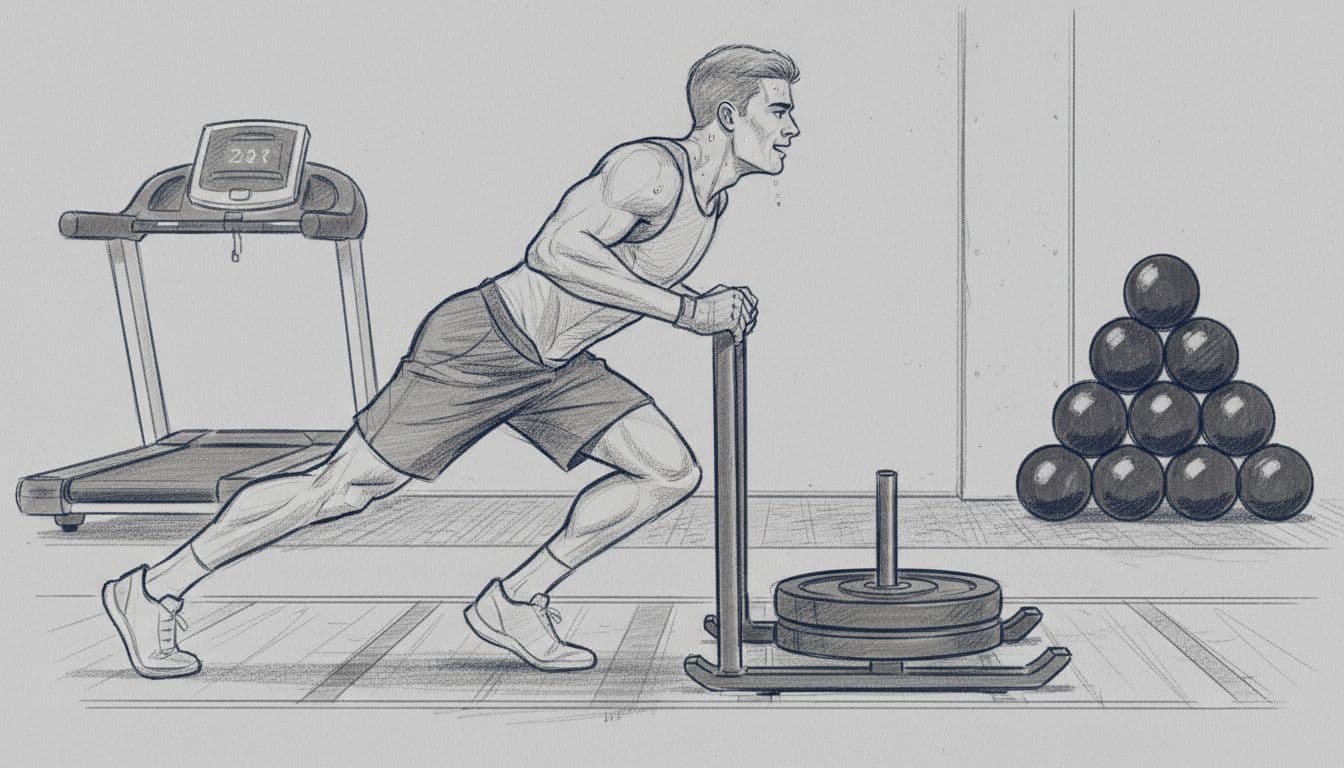
That kind of practice pays off later. On race day, your brain has seen the movie before.
Pick one simple cue that brings you back to center
You don’t need a speech in your head. You need one cue.
It might be “long exhale.” It might be “tall posture.” It might be “smooth.” As part of your goal setting, pick one short phrase or action as a process goal that helps maintain focus during solo training sessions. Repeat it in training until it becomes automatic, and use visualization to reinforce it. Under pressure, simple wins. A good cue acts like a reset button when the pace feels too hot or the lane feels too busy.
Use race-day habits that keep your brain from spiraling
A solid race day routine helps manage pre-race anxiety. Good mental prep gets tested fast once the buzzer goes. This is where small habits save you from making big mistakes.
Start with a pace you can actually hold
The opening run is a trap. You feel fresh, the room is electric, and everyone looks fast. That’s exactly why restraint matters.
A pacing strategy isn’t conservative. It’s smart. If you burn too much on the first run and first stations, the bill comes due later. Settle into a pace that feels almost too easy for the first few minutes, using your rate of perceived exertion (RPE) to gauge intensity. Let other people rush. You’ll see many of them again.
Break the race into the next 10 minutes
Thinking about the whole event can make it feel huge. Thinking about the next segment makes it manageable.
Focus on the next run, the next station, or even the next length of the lane. Finish that, then move on. This goal setting keeps your attention where it can help you. It also stops the mental pile-on that happens when you start calculating everything that’s still left.
Use breathing to slow your thoughts
When stress rises, box breathing is one of the fastest ways to settle your system. Keep it simple.
On transitions, try one longer exhale than inhale. On a walk to your station, let your shoulders drop and breathe out fully. Between efforts, use your breath as a task. It gives your mind something useful to do instead of spiraling into noise.
Stay composed when the stations start piling up
This is the part people remember. Your legs are loaded from the runs, your lungs are loud, and every functional station seems to arrive a little too soon. The athletes who stay calm here usually race better than the athletes who only feel strong early.
Reset after each station instead of carrying stress forward
One bad station doesn’t deserve the next five minutes of your attention.
Maybe your wall balls broke early. Maybe the sled felt awful. Maybe you lost rhythm on the row. Fine. Leave it there. The race doesn’t care what happened one minute ago, and your next section still gives you a fresh chance to settle down and move well.

A quick reset, a form of stress management, can be as basic as one breath, one cue, and eyes forward. That’s enough.
Talk to yourself like a coach, not a critic
Negative self-talk burns energy fast. It also makes the race feel bigger than it is.
You need language that directs, not language that punishes. Positive self-talk keeps your spirits high, while instructional self-talk provides the technical cues. Think, “Stay smooth.” Think, “One rep at a time.” Think, “Keep moving.” Those phrases are short, clear, and useful. Compare that with “I’m falling apart,” which gives you drama but no direction. Positive self-talk is key to keeping spirits high through the grind.
Your body is already under load. Don’t make your brain carry extra weight.
Expect the hard patch and keep moving through it
Every Hyrox race has a stretch where effort feels massive and progress feels tiny. That’s not a crisis. That’s part of the script.
When that patch arrives, embrace the discomfort and embrace the suck. Don’t ask whether something is wrong. Assume it’s the moment you planned for. Then shrink your focus and keep your rhythm. Count reps. Watch your breathing. Lock into the next small job. Emotion will tell you to panic. Rhythm will get you to the next station.
Finish strong by thinking like a racer, not a survivor
Late in the race, mental fatigue can be worse than physical fatigue. That’s why it helps to save a little focus for the final push.
Save a little focus for the final run and last station
Don’t spend all your concentration in the first half. Keep some space for clean decisions late.
When the final run arrives, switch from hanging on to competing for peak performance. This requires mental fortitude. Lift your posture. Shorten your thoughts. Drive your arms. That shift matters. You’re not limping to the line. You’re racing to it.

### Review what worked so your next Hyrox feels less scary
The race ends, but the learning doesn’t.
Take five minutes afterward for post-race reflection and ask two simple questions. What helped you stay calm? What made you feel rushed or rattled? Develop an identity statement, like “I am a finisher,” to build confidence. Seek community support from fellow racers to validate your experience. That quick review builds confidence for next time. Mental prep gets better the same way fitness does, through repetition and honest feedback. These reviews help athletes meet competitive standards in the future and improve their overall mental game.
Frequently Asked Questions
How do I build a Hyrox mindset before race day?
Start in training by simulating race chaos with back-to-back efforts, short rests, and quick transitions to normalize discomfort. Use visualization to expect messy stations and heavy legs, and pick one simple cue like “tall posture” to repeat until automatic. This makes race-day pressure feel familiar, not alarming.
What’s the best way to pace the start of a Hyrox race?
Settle into a pace that feels almost too easy for the first run and stations, guided by rate of perceived exertion (RPE) to avoid early burnout. Let the electric atmosphere and fresh legs tempt others to rush—you’ll pass them later. Restraint is smart, not conservative.
How do I stay calm when stations feel overwhelming?
Reset after each station with one breath, your cue, and eyes forward—don’t carry stress forward. Talk to yourself like a coach with short directives like “keep moving” or “stay smooth,” avoiding negative drama. Expect the hard patch where effort feels massive; shrink focus to the next rep or breath to push through.
How can I finish a Hyrox race strong mentally?
Save concentration for the final run and station by switching from survival to racing—lift posture, drive arms, and shorten thoughts. Post-race, spend five minutes reflecting: What kept you calm? What rattled you? This builds confidence and sharpens your mental game for next time.
Final thoughts
Hyrox will always ask a lot from you. Heavy breathing, tired legs, crowded stations, all of that comes with the ticket. Panic, though, is optional.
A strong Hyrox Mindset comes from physical strength, effective stress management, practice, smart race-day habits, and quick resets when things get loud. The race doesn’t need to feel easy. You only need to stay steady enough to keep making good choices when it gets hard. Developing resilience is the ultimate reward of the training process.



Leave a Reply