
Essential Cocktails for Men: 5 Timeless Recipes + Barware

As an Amazon Associate, TooristX earns from qualifying purchases. This comes at no extra cost to you.
A good home bar doesn’t need a wall of bottles or a pile of gimmicky tools. It needs a few drinks you can make well, every time.
If you’re building a home bar from scratch, start with the classics that teach the basics. These five drinks cover stirred and shaken methods, spirit-forward pours and citrus-based cocktails, plus a range of bottles you’ll keep using. Learn them once, and the rest of your cocktail life gets easier.
Home Bar Essentials, The Gear You Actually Need
Start with a quality bartender kit. It should include a shaker, jigger, strainer, and muddler. That small set handles most beginner and intermediate drinks without wasting space. The shaker covers the Whiskey Sour, the jigger keeps every pour consistent, the strainer keeps ice shards out of the glass, and the muddler is there when you branch into drinks that need fruit, herbs, or sugar broken down.
A mixing glass with a bar spoon matters more than most beginners think. Stirred drinks need control, not brute force. The Manhattan, Negroni, and Martini all taste better when they’re chilled and diluted gently, not beaten up in a shaker. A proper spoon also makes stirring smooth instead of clumsy.
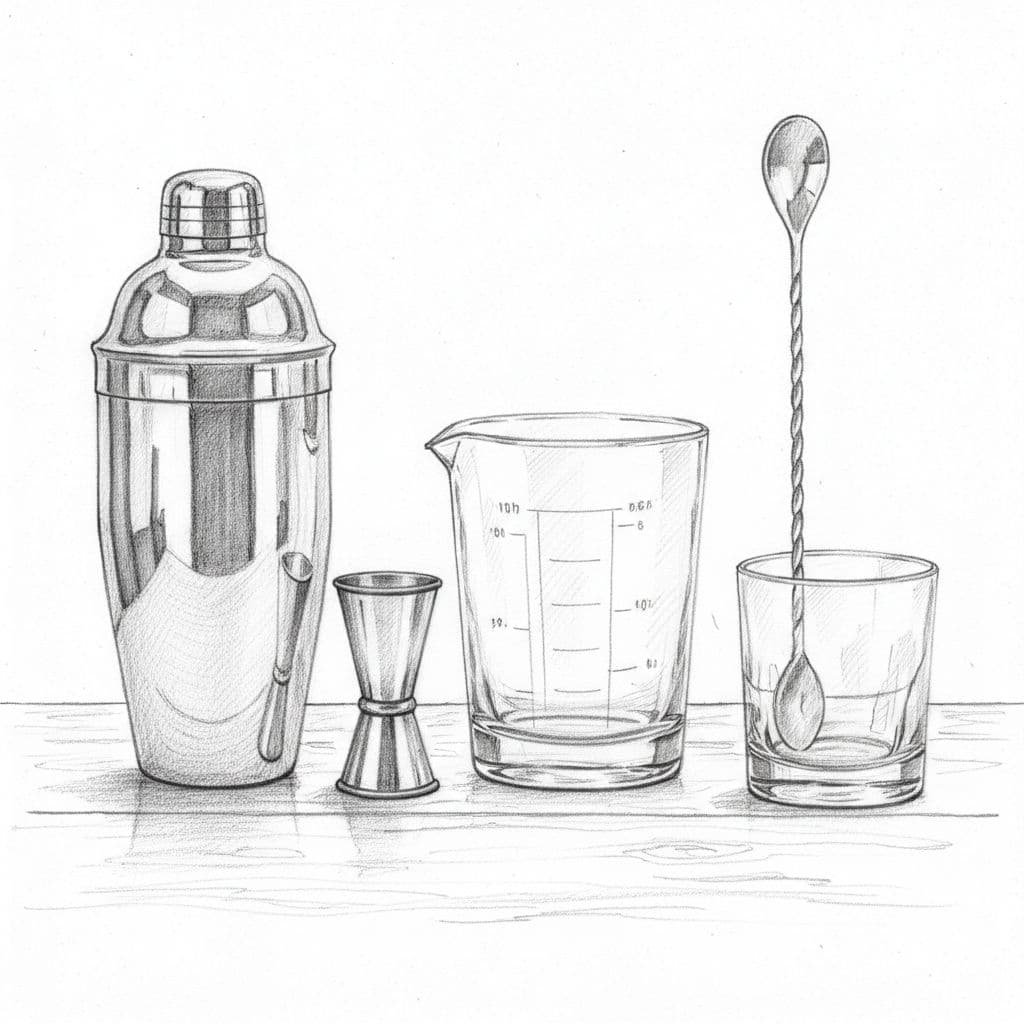
Get a large ice cube or sphere mold early. Big ice melts slower, which means your drink stays cold without turning watery in five minutes. You notice that most in an Old Fashioned and a Negroni, where texture and slow dilution are part of the whole point.
Keep Angostura aromatic bitters on hand. It’s a tiny bottle, but it pulls real weight. A few dashes give an Old Fashioned structure and give a Manhattan that dry, spiced edge that keeps whiskey and vermouth from tasting flat.
Finish with a set of rocks glasses. They’re the workhorse glass in a practical home bar. You’ll use them for an Old Fashioned, a Negroni, and many Whiskey Sours, and they feel right in the hand without trying too hard.
Old Fashioned
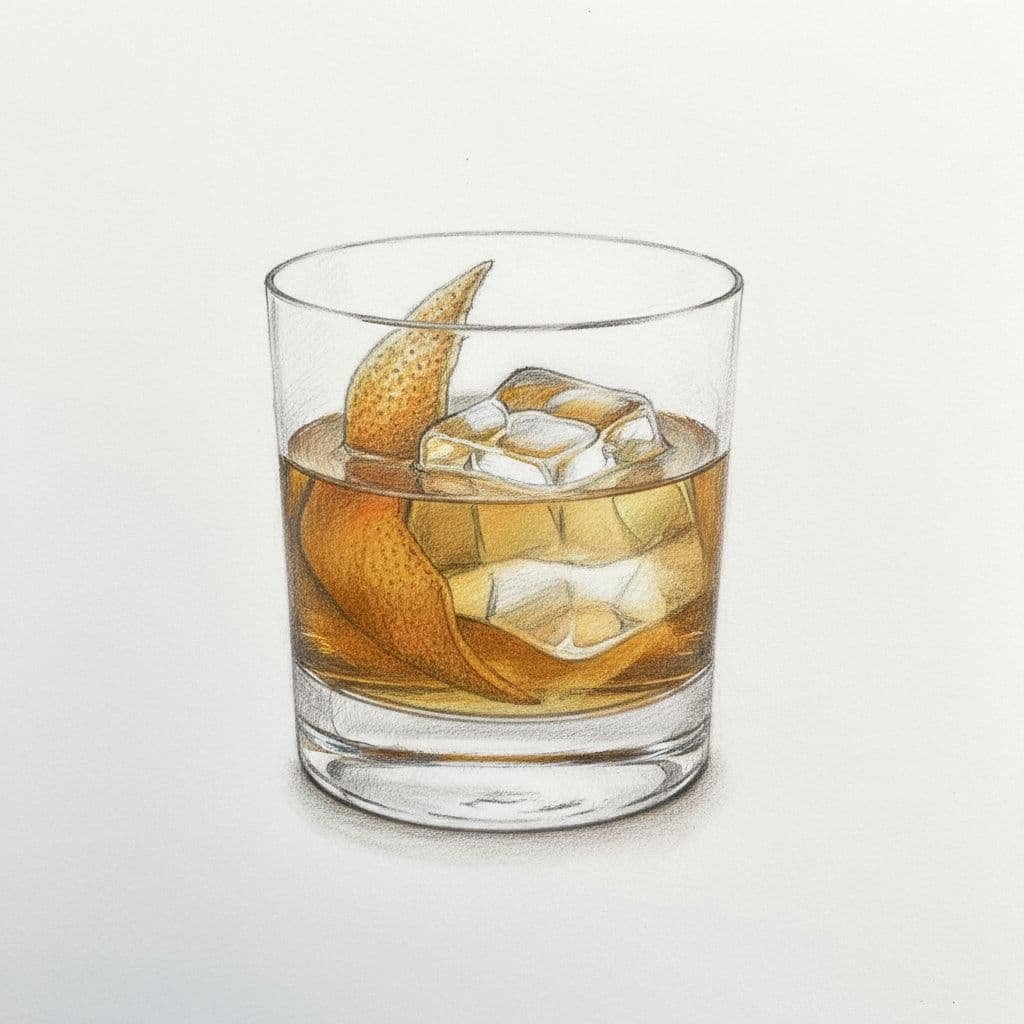
The Old Fashioned dates back to the 1800s, and it still matters because it proves how far a few ingredients can go. Whiskey, sugar, bitters, citrus, ice. That’s it. Make this well, and you’ll build confidence with spirit-forward drinks fast.
Ingredients
- 2 oz bourbon or rye
- 1/4 oz simple syrup
- 2 dashes Angostura aromatic bitters
- 1 orange peel
- 1 large ice cube
How to make it
- Add the whiskey, simple syrup, and bitters to a mixing glass.
- Fill with ice and stir for about 20 seconds.
- Place a large ice cube in a rocks glass.
- Strain the drink over the ice.
- Express the orange peel over the glass, then drop it in.
Pro tip: Don’t just toss in the orange peel. Twist it over the drink to spray the oils across the surface first. That small move changes the first sip.
Manhattan
The Manhattan came out of late 19th-century New York and belongs in any serious home bar. It’s a stirred whiskey cocktail that teaches balance, dilution, and restraint. Nothing hides here, which is exactly why it’s worth learning.
Ingredients
- 2 oz rye whiskey
- 1 oz sweet vermouth
- 2 dashes Angostura aromatic bitters
- 1 cocktail cherry
How to make it
- Chill a coupe or martini glass while you mix the drink.
- Add the rye, sweet vermouth, and bitters to a mixing glass with ice.
- Stir for 25 to 30 seconds.
- Strain into the chilled glass.
- Garnish with a cherry.
Pro tip: Rye gives the Manhattan a drier, spicier profile than bourbon. If you want the classic version with more snap and less sweetness, start there.
This is one of the best drinks for learning proper stirring with a mixing glass and bar spoon. Once you can nail the texture here, the Martini gets much easier.
Negroni
The Negroni came out of Italy in the early 1900s and never really left. It has old-school roots, but it still feels current because the formula is so clean. Equal parts, easy to remember, hard to get tired of.
Ingredients
- 1 oz gin
- 1 oz Campari
- 1 oz sweet vermouth
- 1 orange peel
- 1 large ice cube
How to make it
- Add the gin, Campari, and sweet vermouth to a mixing glass with ice.
- Stir for 20 to 25 seconds.
- Strain into a rocks glass over a large ice cube.
- Express the orange peel over the drink and add it to the glass.
Pro tip: Use a big cube if you can. The Negroni gets better with slow dilution, and small ice waters it down before the bitterness and citrus can settle into balance.
This drink ties the gear section together nicely. A mixing glass, bar spoon, and large cube mold are all doing real work here.
Whiskey Sour
The Whiskey Sour is a great bridge between booze-forward classics and brighter citrus drinks. That’s why it stays popular. It has the backbone of whiskey, but lemon and sweetness keep it lively and easy to read on the palate.
Ingredients
- 2 oz bourbon
- 3/4 oz fresh lemon juice
- 3/4 oz simple syrup
- Ice
- Lemon wheel or cherry for garnish
How to make it
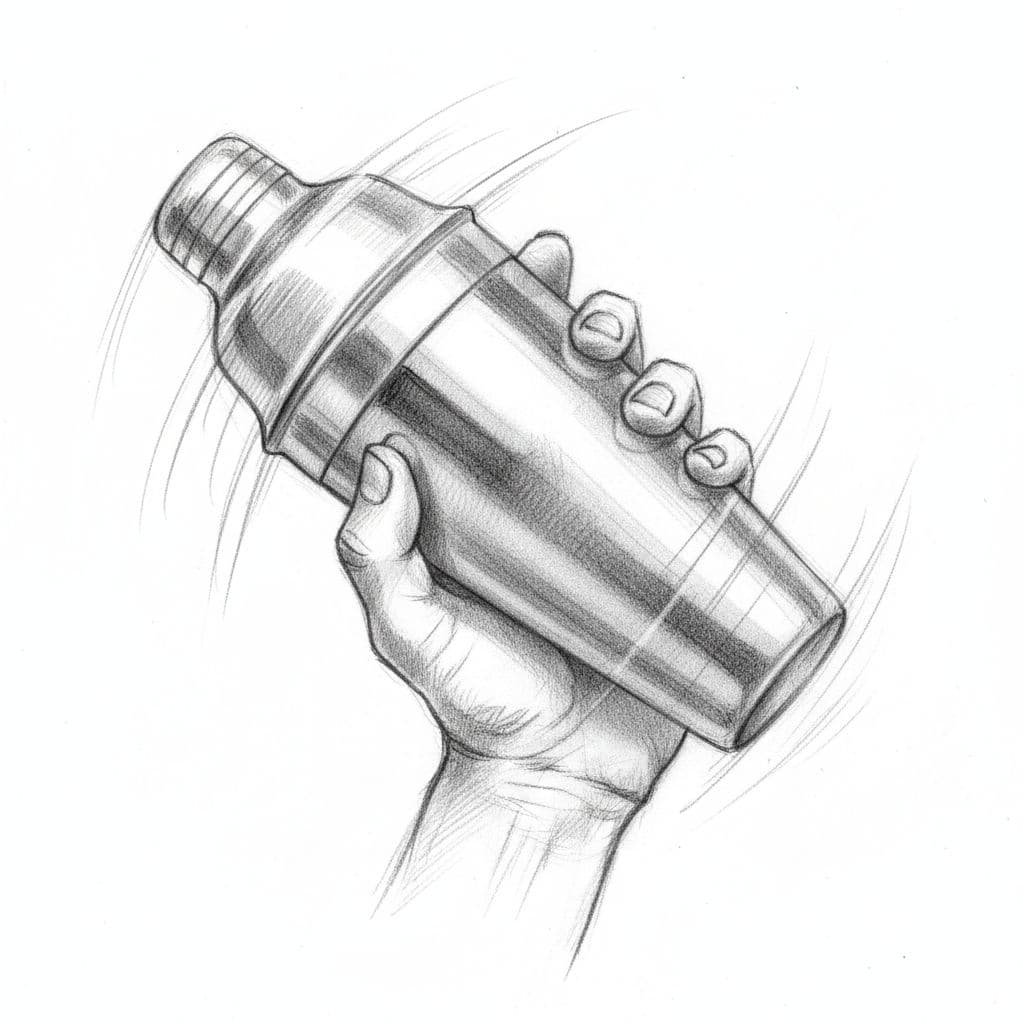
- Add the bourbon, lemon juice, and simple syrup to a shaker with ice.
- Shake hard for about 12 to 15 seconds.
- Strain into a rocks glass over fresh ice.
- Garnish with a lemon wheel or cherry.
Pro tip: Fresh lemon juice is non-negotiable. If you want a silkier texture, add a small amount of egg white and do a dry shake first, then shake again with ice.
For beginners, this drink is friendly without being boring. It teaches measuring, shaking, and balance in one glass.
Martini
The Martini took shape in the late 1800s and became the benchmark for cold, precise, stirred cocktails. It’s a must-know because it teaches discipline. Small changes in gin, vermouth, temperature, and garnish can turn it sharp, soft, savory, or bright.
Ingredients
- 2 1/2 oz gin
- 1/2 oz dry vermouth
- 1 lemon twist or 1 olive
- Ice
How to make it
- Chill your glass well before you start.
- Add the gin and dry vermouth to a mixing glass with ice.
- Stir for 25 to 30 seconds until very cold.
- Strain into the chilled glass.
- Garnish with a lemon twist or olive.
Pro tip: Warm glassware kills a Martini fast. Chill the glass, use plenty of ice while stirring, and don’t skimp on vermouth unless you want the drink to taste flat and harsh.
Like the Manhattan, this drink rewards a proper mixing glass and bar spoon. It’s polished, but it doesn’t need to be fussy.
Common Mistakes Beginners Make
Using warm glassware is an easy way to ruin a good drink. A Martini or Manhattan in a room-temperature glass loses its edge almost immediately.
Over-diluting happens when you stir too long, shake too long, or pour onto weak, wet ice. Cold is good. Watery is not.
Skipping fresh citrus hurts a Whiskey Sour more than almost anything else. Bottled lemon juice tastes dull and throws off the whole drink.
Shaking drinks that should be stirred is another common miss. If the recipe is all spirits, like a Manhattan, Negroni, or Martini, stir it. If it includes citrus, like a Whiskey Sour, shake it.
Frequently Asked Questions
What is the difference between shaken and stirred?
Shaking chills and dilutes a drink fast, and it also adds aeration. That’s what you want for citrus drinks like a Whiskey Sour. Stirring is gentler, so spirit-only drinks stay clear, silky, and better balanced.
Do I need expensive whiskey for an Old Fashioned?
No. You need whiskey you enjoy drinking on its own and that still tastes like itself once bitters and sugar are added. A solid mid-range bourbon or rye is usually the sweet spot for home use.
Which cocktail should I learn first?
Start with the Old Fashioned. It has few ingredients, teaches measuring and stirring, and gives you a strong feel for how dilution changes a drink. After that, the Manhattan and Negroni make more sense.
Can I make these drinks without a full bar setup?
Yes, though the results get better with the right tools. You can use a jar with a lid as a shaker and a spoon for basic stirring, but a real jigger, shaker, and mixing glass make consistency much easier.
What is the best glass for these classics?
A rocks glass covers more ground than anything else. It’s the right pick for an Old Fashioned, Negroni, and many Whiskey Sours. For a Manhattan and Martini, a chilled coupe or martini glass is the better call.
Conclusion
These five drinks are the right place to start because they teach the core moves that matter: measure well, stir when you should, shake when you should, and respect temperature. That’s the foundation of a home bar that lasts.
If you’re picking one drink to learn first, make it the Old Fashioned. It’s simple, useful, and honest. Once that recipe feels natural, the rest of this lineup falls into place.



Leave a Reply